Cart 0

When you take that first, comforting sip of coffee in the morning, it’s easy to focus entirely on the rich aroma swirling from your mug. But long before those beans were roasted to perfection, they were part of a living, breathing ecosystem.
Every single coffee bean has a story that begins deep in the soil. It is a story of time, immense patience, and meticulous care.
If you’ve ever wondered how a tiny seed transforms into a thriving, fruit-bearing tree, welcome! Let’s take a walk through the rows of the coffee farm and explore the fascinating lifecycle of the humble coffee plant.
How Long Does a Coffee Plant Live?
Featured Snippet Answer: A healthy coffee plant can live for 30 to 40 years, and in some exceptional cases, well over 50 years. However, its most productive fruit-bearing years occur between ages 5 and 20. The journey from a newly planted seed to the very first harvestable coffee cherry takes about 3 to 5 yearsof careful cultivation.
Stage 1: The Nursery (The “Baby” Steps)
The journey begins with a choice bean. Instead of being sent to a roasters, these select green coffee beans are planted in specialized, shaded nursery beds.
Think of the coffee nursery as a protective daycare. The soil is kept perfectly moist, and a canopy shades the delicate sprouts from the harsh tropical sun.
Within a few weeks, a small miracle happens. A tiny sprout breaks through the soil. In the coffee world, we affectionately call this the “soldier” or “matches” stage because the straight stem pushes upward with the round seed still attached to the top, looking exactly like a little green matchstick.
Soon, the seed coat drops away, revealing the first two leaves. At this point, farmers call them “butterflies”(mariposas) because of how the leaves open up wide.
Stage 2: Moving to the Field
After about 6 to 10 months of pampering in the nursery, the young saplings are strong enough to face the world.
During the rainy season—when the soil is soft and nutrient-rich—the farmers carefully transplant the young trees into the main fields. This is a critical moment. The roots need plenty of space to stretch out deep into the earth to drink in the local terroir, which gives the coffee its unique regional flavors.
On Ana’s family farm in Brazil, this planting season is filled with hope and anticipation. Every sapling planted represents an investment in the future, requiring years of weeding, pruning, and protection before it ever yields a single cent.
Stage 3: The First Flowers (A Blanket of Snow)
For the next three years, the coffee tree focuses all its energy on growing tall and growing strong branches. It hasn’t produced any coffee yet, but it is preparing.
Then, usually after a heavy rainfall, something breathtaking happens: the flowering stage.
Almost overnight, the coffee fields transform. The branches erupt with clusters of delicate, white blossoms. The view is spectacular, often looking like a sudden blanket of fresh snow has fallen over the tropical hills.
Even better than the sight is the aroma. Coffee blossoms smell sweet and intoxicating, highly reminiscent of jasmine or orange blossoms.
But these flowers are fleeting. They only last a few days before wilting away, leaving behind a tiny green bump at the base of the branch. This bump is the beginning of the coffee fruit.
Stage 4: The Ripening Green to Red
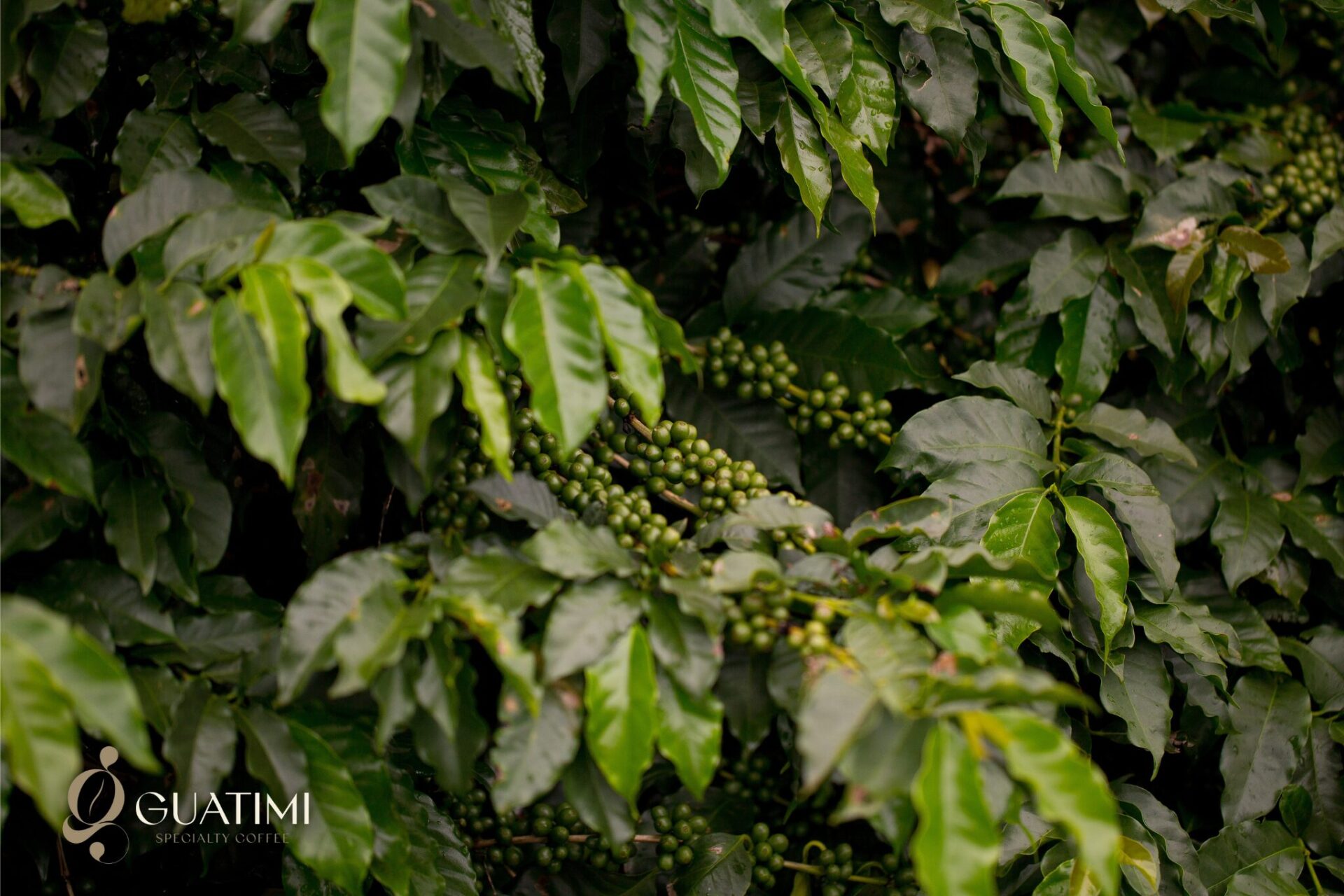
This is where the farmer’s patience is truly tested. It takes roughly 6 to 9 months for those tiny green bumps to mature into fully grown fruit.
We call the fruit coffee cherries because as they ripen, they turn a vibrant, deep ruby red (or sometimes a bright golden yellow, depending on the variety).
Inside each cherry sits two seeds pressing against each other. These seeds are what we know as coffee beans!
To get the best possible flavor, the cherries must be picked at the absolute peak of ripeness. If they are picked too early (while still green), the coffee will taste bitter and astringent. If picked too late, it becomes over-fermented and sour.
Because coffee cherries on the same branch don’t always ripen at the exact same time, the highest quality specialty coffee is often picked entirely by hand. Hand-pickers will walk through the same row of trees multiple times over a harvest season, selectively picking only the perfectly ripe, ruby-red gems.
Stage 5: The Mature Tree and Beyond
By year 5, the coffee tree reaches full maturity. It is now a staple member of the farm’s ecosystem, producing a steady annual harvest.
As the tree ages, farmers gently prune the branches to encourage new growth and keep the plant at a manageable height for harvesting. Left to grow wild, an Arabica coffee plant can grow into a tall tree, but keeping it pruned like a bush ensures all its energy goes into producing delicious fruit rather than extra wood.
With the right balance of sunshine, rainfall, and loving care, this single plant will continue to provide the raw materials for thousands of morning rituals for decades to come.
From Farm to Cup: The Big Picture
Understanding the lifecycle of a coffee plant changes how you look at your morning mug. It takes years of agricultural dedication just to get a handful of fruit from a single tree.
That is why we treat coffee with so much respect. When coffee is sourced directly from independent farms and roasted in small batches, it honors the years of patience and hard work that the farmers—and the trees themselves—poured into the soil.
The next time you enjoy your coffee, take a moment to thank the decades-long journey of the beautiful plant that made it possible.
Frequently Asked Questions (FAQ)
Can you grow a coffee plant at home?
Yes! While you likely won’t harvest enough beans to supply your daily caffeine habit, Arabica coffee plants make wonderful, glossy green houseplants. They love bright, indirect sunlight and humid environments.
How many coffees does one tree produce per year?
On average, a healthy mature coffee tree produces about 1 to 2 pounds of green coffee beans per year. That means it takes the entire annual output of one tree just to make about two or three bags of roasted coffee!
Do coffee plants grow all over the world?
Coffee plants are quite particular. They thrive best in the “Bean Belt”—the equatorial region between the Tropics of Cancer and Capricorn. They love tropical climates with distinct wet and dry seasons, high altitudes, and rich, well-draining soil.
Ready to Taste the Journey?
Experience the final chapter of the coffee plant’s long story. Our single-origin coffees are grown with generational care on small farms and roasted carefully in small batches to highlight the natural flavors of the harvest.